Teaguen Miller
Digital Media Literacy
The Civic Imagary in A Ballad of Songbirds and Snakes
October 9, 2025
For this week’s blog post, I wanted to write about a book I just finished reading last week, The Ballad of Songbirds and Snakes by Suzanne Collins. This book is a prequel to The Hunger Games series, and shows the post-war effects of totalitarianism in that world. In the novel, the main character, a young man, is assigned to train a contender in the Hunger Games. The Hunger Games is a tournament where the government selects 2 tributes from each of the nation’s 12 districts to fight to the death, as a means to punish the low-status members of the districts for their insurrection during the war. The games present both a means of entertainment for the Capitol leadership, and a means to control the lower class. When considering the prompt for this post, I thought this story is a good example of a cultural resource because it depicts a society in which the divide between the upper class and lower class is so significant, and how the government has near-complete control over its citizens.
The government in the Hunger Games is a reimagined version of past totalitarian regimes, a government structure seen in Stalin’s Soviet Union, Hitler’s Nazi Regime, and in modern North Korea. Totalitarian government is an extreme form of authoritarianism, where the government seeks to control virtually every aspect of public and private life. In the Hunger Games world, the government and its wealthy, affluent members and staff live in the Capitol, a futuristic version of North America. Outside of the Capitol are 12 districts that have varying degrees of poverty, but none have access to the technology and luxury provided in the Capitol. While the story describes a reimagined version of North America, no references to any existing governments are made, so it is unclear if the story serves to reference any singular past, present or speculative future government.
In order for this imagined alternative to become a reality, some significant systemic changes would need to occur. In the United States, we have had a federal government, with some democratic elements, since we gained independence from Britain in 1776. U.S. citizens are allowed to vote their leaders into office, and all citizens have a set of rights granted to them by the U.S. constitution. However, some people face greater struggles than others to maintain their rights in the eye of the government. In order to create the systemic shifts from our government to that of the fictionalized nation of Panem, our government structure would need to change significantly. There would be no state governments, and the central government, our U.S. capitol, would have full control over its citizens. The president and other government officials would no longer be elected, and decisions would be made by the president and their cabinet only. The military would be mobilized and spread throughout the country in order to keep citizens in check. Finally, technology, media, news, and events would be controlled by the government.
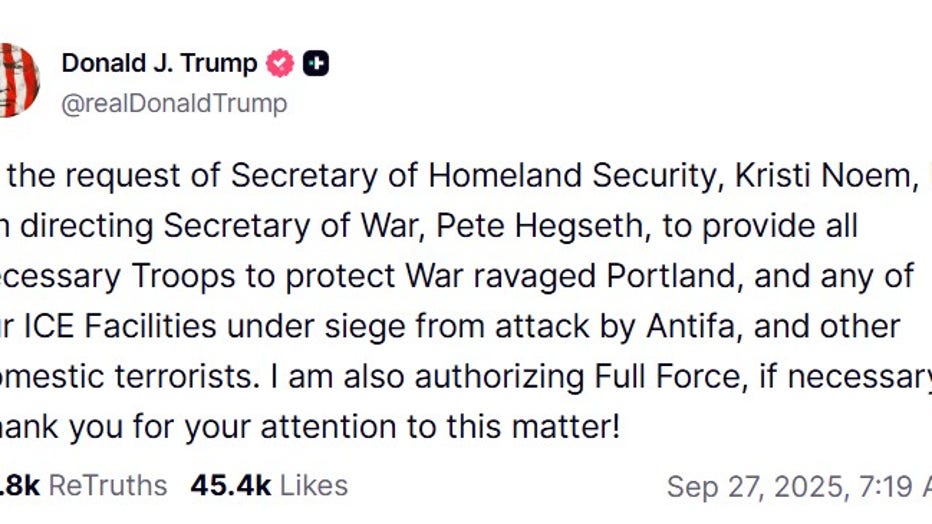
While A Ballad of Songbirds and Snakes is a fictional story, I see some elements of authoritarianism creeping into our current society. Recently, there have been talks of deploying more national guard troops to my hometown, Portland, OR. The president believes that Portland is “war ravaged” and that National Guard troops are necessary to keep the peace. I do not think that National Guard deployment is necessary here, the city has been very safe for me. Lawmakers have also said that the president is overstepping his authority, and it worries me what else he will be able to get away with in the future. Having more control over the people, using the military to keep them in line, and being able to get away with breaking the law are all traits of a dictator. While I was reading A Ballad of Songbirds and Snakes, I drew some parallels between the government in Panem, and the actions of the U.S. government in current events. It is a proper cultural resource that shows what an extreme totalitarian government environment can look like, and how difficult it makes life for the common person.
The Negative Stereotypes Against Food Service Workers
October 4, 2025
I think the place where I experience the most stereotypes is my workplace. I work for Starbucks Coffee Company, and l experience a lot of negative interactions with customers every day. I believe that a lot of negative interactions are caused by a bias against service workers, even specifically Starbucks employees. Last year, I was promoted to manager, but I still experience a lot of the negative attitudes from customers, and having patrons look down on me. While these interactions do not typically make much of a difference – ultimately, the customer still buys the product, receives it, and leaves – working in a place where many people treat you and your team rudely is bad for morale.
I have experienced different forms of bias against service workers growing up. When I was in school, many of the students were from wealthy families, who looked down on service workers, and had the resources to begin their career approach right after high school. My parents always considered food service to be a temporary job for high schoolers, and not a long term career choice. My mom especially looked down on food service workers, and complained a lot when her food was not prepared correctly. She was one of the first people I observed being rude to food service workers. Many people I knew growing up are not polite to service workers, despite the fact that they are nearly always kind.

I have also seen a lot of bias against food service workers online, typically McDonalds and Starbucks. This might be because they are some of the larger companies, but I also think it has to do with the perceived ease of working for those companies. Many posts online make fun of Starbucks workers for complaining about their jobs because “it is just making coffee” something everyone can do at home. However, the job duties exceed making coffee – employees are expected to keep the store very clean, handle cash and interact with many customers in a day – all while working in a high stress environment where speed is crucial. I have worked a variety of jobs in my life so far, and I would have to say working for Starbucks has been one of the more challenging ones.


I think it is easy for people to look down on Starbucks workers because they only consider their coffee being made, not the other factors. For many Starbucks workers, rudeness from customers and the sense of urgency is the most difficult part of their job. In this article from the New York Post, a few workers illustrate their difficulties with working for Starbucks. One worker says that she is “exhausted all of the time” and “constantly crying in the bathroom”. Another says that “it is a mentally exhausting job”. It seems that many baristas and food service workers experience a lot of stress from their jobs, which can have negative long term effects. I found it interesting that the comments in response to the article were largely negative as well, and poked fun at the workers for complaining about their jobs.
Finally, I think that another reason that Starbucks workers experience a lot of negative stereotypes is the general attitude towards food service workers, even outside of fast food. This article from Inequality.org highlights how restaurant workers face a lot of struggles and are frequently stereotyped in a negative manner. Restaurant workers often have low wages, unpredictable schedules, and little to no benefits. The field is populated by mostly women and people of color, who already face many barriers. It is easy for people to look down upon food service workers because they are the working class and live to serve others. It is a shame that I have to experience this bias every day, because I do my best to provide others a positive experience despite how I am treated by them. Without food service workers, people would not have the convenience of being able to eat out with ease, and I believe their work is crucial for our society.
How Persuasion Affects Public Opinion on the Danger of Vaccines
September 27, 2025
Vaccine skepticism is very common in the United States, and many people believe that vaccines have negative health effects. One example of a phenomenon that caused people to be concerned about vaccines is an article published in 1998 that established the causation of autism from vaccines, specifically the Measles, Mumps, and Rubella Vaccine (MMR). The article, from Dr. Andrew Wakefield, led a study of 12 children who had recently received the MMR vaccine. The purpose of the study was to determine if the MMR vaccine caused developmental and gastrointestinal issues in the children. The study found that 8 of the 12 children experienced behavioral changes after the study, which Wakefield and his team concluded was a result of the vaccine. However, at least 20 studies from other sources indicate that there is no correlation between the MMR vaccine, or any vaccine, and Autistic Spectrum Disorder (ASD). Wakefield’s study had a low sample size, and was heavily biased due to the fact that individuals who funded his studies, and the parents of the participants, were already predisposed against vaccines. The study was redacted by the Lancet scientific journal in 2010, but has had lasting effects on the public opinion of vaccines.
Due to the study published by Wakefield et al., public belief about the dangers of vaccines has increased since 1998. According to data, there has been a large increase in vaccine skepticism since 1998. There has been no credible research that proves a correlation between vaccines and ASD, however many people have been influenced to believe in one. The main tactics used to spread anti-vaccine rhetoric are expert testimony and scientific evidence. Having information be backed by scientists or scientific evidence makes that information seem much more believable, even if those sources are corrupt. Even general statements without citation, such as “scientists recommend…” or “research shows…”, can impact an individual’s assessment of informational credibility. Also, the debate on the danger of vaccines is very politicalized, and politicians persuade their followers to vote for or against vaccination. A recent example of this is during the 2020 presidential elections, when Donald Trump downplayed the threat of the COVID-19 virus and described it as akin to the flu. He persuaded his followers to vote in favor of himself over Joe Biden by making fun of Biden’s policies for social distancing, and suggested that the virus was a “new hoax”. The politicalization of the COVID-19 vaccines caused them to become public later than they could have been, and created public hesitancy, therefore many people did not end up receiving the vaccine.
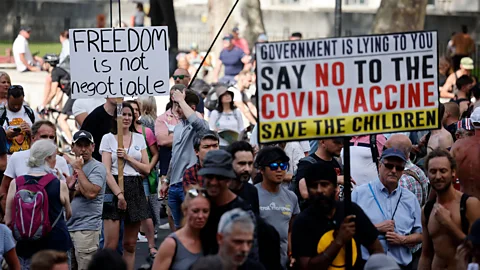
Overall, vaccine skepticism is largely caused by the influence of those in power persuading the public to believe in the danger of vaccines. Scientists and scientific research play a major part in public understanding of scientific issues, since they do not have the means to conduct studies on their own. Even if one scientist publishes misleading information in order to persuade others to believe in something, it can harm public understanding. The data released by scientists can also be politicized, which creates a split in belief between parties, even if it has not been-fact checked. Since the general population does not have the bandwidth to research many issues, it is up to their government officials to keep them informed, and it is possible for scientists and the government to mislead others through persuasion in order to further their own goals. The example of the controversy around vaccines in relation to ASD is one in many pieces of information being twisted through persuasive methods to appeal to the people.
A Day of Media Usage
September 11, 2025
3:00am – Messages
I woke up and checked my messages, mainly my texts and emails. While I’m ideally not providing a lot of information by checking my messages, there are a lot of marketing emails present, with the intent to sell me products.
3:15am – Spotify
I listened to music on Spotify while I got ready and on the car ride to work. I know Spotify has a strong algorithm, and receives a lot of information about my music interests in order to provide me with more music that I will be interested in. I have noticed that Spotify often promotes the same artists to me, and they are typically artists that already have a large following.
3:45am – Instagram
I checked my messages on Instagram, and scrolled through the feed a bit. I feel like my account is pretty secure fortunately, but who knows what data Meta is sharing with other companies and using for their own gains. Fortunately, I do not post much about myself, only the very occasional photo, and I do not have a significant digital footprint. I mostly see Instagram’s algorithm at play when I interact with videos – for instance, if I watch a cooking video, my feed will be filled with many more, with the intent to hold my interest and keep me on the app.
5:45am – Apple News
I spent my lunch break reading today’s news – mostly very negative things. Some of what I read included articles from USA Today, NPR, NBC, and The Washington Post. I read about a school shooting in Colorado and the assassination of a popular political figure, which both caused me to feel very anxious about the state of the country I am living in. I don’t know if Apple News has an algorithm associated with it, and there aren’t any security concerns, so I do not worry too much about my digital impact when I am reading the news.
9:15am – NYT Games
During my break, I played the NYT Wordle. Sadly they placed the Mini Crossword behind a paywall last week, so I’m not able to play that any more. I have an account associated with the New York Times that might share a password with some other accounts, so I may need to change it or delete my account when I go through and update my passwords.
12:30pm – Spotify
I listened to more music on the way home, this time a psychedelic rock playlist that the app provided me with.
1:00 – 5:00pm – Canvas, Youtube
When I got home from work, I worked on classwork on Canvas. Some of the learning materials that I am studying are posted on Youtube, which is owned by Google. Google is known to be a business that buys and sells information, so I am sure that the data gained from my consumption is being shared with any businesses that would benefit Google.
7:15pm – Google Drive
After dinner, I worked on an essay for class in Google Docs. I am not sure if Google shares the information from their workplace suites with other companies, but I hope they do not. As far as security is concerned, I know that Google is a large company with good security, but they still face data leaks. Fortunately, I have 2-factor authentication set up, and I change my password every year, so that should help me stay secure.
That was all my media usage for today. I have been spending a lot of time this week on homework, so I haven’t had as many opportunities to spend time on social media or other digital sites. This is not a bad thing though, and I welcome the break from the online world. This blog post helped me to consider my data security, and how much of my information is public and being shared with others. While I do have some information present online, I believe it is rather secure. A project I want to work on to have more online privacy is giving individual passwords to all of my accounts, and setting up 2-factor authentication on each one. I still have lots of work to do to improve my online privacy.
A Day of Media Usage
August 30, 2025
Overall, I spend a lot of my available time during the day looking at or listening to various forms of media. Over the 18 hours I was awake, I would say I spent half of them listening to music, an hour watching videos, and an hour or so of reading. This varies depending on the day, since I spend less time on my phone or reading a book while I’m out with friends and family, and sometimes I use video games as a way to socialize with my friends, so my media usage on those days is much higher. I rely on digital media for almost all of my entertainment and news. I don’t know if the news I see is the most credible, but when I am looking for specific information, I’ll typically look at the local news or sources that are approved by my school. However, I mostly rely on information from the people around me, and I’m not always sure where they get their information from. I thought this week’s blog post was a great way to get me thinking both about how much of my day I spend consuming media, and about how useful or detrimental the different forms of media may be.
For this weeks’ blog post, I decided to document my media usage on Tuesday, August 26th. Tuesday was an average workday, and I did not have any plans to go out, so I decided to document my usage in a typical day at work and at home.
3:00am – Instagram, Messages, Discord
I opened up my phone first thing after my alarm goes off to check my messages from the night before. I go to bed earlier than basically everyone I know, so there are usually a few. I mainly use my phone’s messaging app, Instagram, Discord and e-mail to communicate with people, so those are the first things I check.
3:15am – Spotify
I listened to music on Spotify while I got ready and drove to work.
3:50am – Various Newspapers
I start work at 4, but I arrive a few minutes early and checked the news on my phone.
6:00 – 6:30am – Acceptance by Jeff Vandermeer
On my lunch break, I read some of Acceptance, the third book in an apocalyptic mystery series that I have been enjoying.
9:00am – NYT Games
During my second break at work, I played today’s Wordle and Mini Crossword. I usually try to play both of them every day, and sometimes some of the other games in the app. The app also has a few ads, both for their newspaper subscription and today, some prescription medicine ads.
12:00 – 7:00pm – Spotify
On my way home from work, I started a recommended playlist from Spotify with some alternative and indie music I enjoy. I played this playlist for most of the rest of the night, and only paused for dinner. I try to listen to music as much as I can, I like having background noise.
1:15pm – Canvas and Youtube
When I got home from work, I logged into Canvas to get some classwork done. I read some essays and watched some YouTube videos for class. I also take note of the due dates for important assignments in the calendar app on my phone.
2:45pm: Instagram and Youtube
While I took a break from my homework and had tea and a snack, I checked my messages on Instagram and looked at some videos my friends sent me. While I ate, I started watching one of the people I am subscribed to on YouTube, who goes by The Professor. He was playing a card game I play called Magic: The Gathering, and I enjoy watching him play with his guests.
5:20pm – Dinner and Disney+
While I cooked and ate dinner, I started to watch Captain America: Brave New World on Disney+ and got through about half of the movie. I like Marvel movies, but lately they have held my interest less. I found it tough to focus on this one, and I can’t connect to the characters.
6:45pm – More Acceptance
Before bed, I read some more of Acceptance. This book series has been difficult to stay away from, and I have been reading some before bed the last few days. Due to the genre, the book gets strange at times, and I think it has been getting into my dreams a bit. I can often see some of the media I consume when I’m trying to fall asleep at night.
-
Hello world!
Welcome to WordPress. This is your first post. Edit or delete it, then start writing!